Engineering Sales Recruitment
Specialist sales hires for the manufacturers, subcontractors and service providers in the UK’s heavy engineering supply chain.
Hire Now Case Studies Engineering Sales Salary GuideSpecialist sales hires for the manufacturers, subcontractors and service providers in the UK’s heavy engineering supply chain.
Hire Now Case Studies Engineering Sales Salary Guide
Engineering is not a single market. It is a supply chain that runs underneath manufacturing and construction, where the buyer pays for engineering content rather than off-the-shelf product. Marine and defence primes buying tier-two components, energy operators specifying long-life equipment, infrastructure asset owners commissioning bespoke systems, subcontract machinists selling capacity rather than catalogue, and engineering consultancies selling expertise rather than deliverables — all of them are different sales jobs, all of them sit under the same heading. Sales Recruit UK has spent seventeen years hiring across this supply chain, for the manufacturers, subcontractors and service providers who win in it. We also run dedicated searches across the Scottish market — see engineering sales recruitment in Scotland.
Engineering buyers don’t buy on a price list. They buy on capability — what you can build, what you have built, what your quality system says about what you’ll deliver, and whether your engineers can sit across a table from theirs and have the right conversation. The sale is technical, slow at the front end, and protected at the back end by qualification cycles, approved supplier lists, regulatory certifications and multi-year programmes.
That puts the salesperson in an unusual position. They are not closing a transaction — they are positioning a business. Their job is to put the company in front of the right buyer, demonstrate credibility, manage a long pipeline through specification and qualification, and then protect the relationship through delivery. The sales mechanics differ by end-market and by what the company sells, but the underlying reality is consistent: engineering sales is about earning the right to be considered, then earning the right to be chosen.
These three end-markets buy more like each other than like anything else. Programmes run for years, supply chains are tiered, security clearance shapes who can sell into them, and regulatory frameworks — DNV, MOD DEFCONs, EASA, FAA, ITAR — define what the salesperson can promise. The same supplier often serves all three.
The customer is a prime contractor or a tier-one — BAE Systems, Babcock, Rolls-Royce, Leonardo, Thales, MBDA, GKN Aerospace, Airbus, Lockheed Martin, the major shipyards and the MRO operators — and the sale runs through bid teams, programme managers and procurement under long approval cycles. The salesperson has to navigate the prime’s internal structure, manage qualification through approved supplier processes, and keep the relationship alive across programme phases that can span a decade.
For tier-two and tier-three suppliers selling components, sub-systems, materials, MRO services, electronic systems, fasteners, fabrications and engineered assemblies into this supply chain, the win is being designed in early and locked in for the life of the programme. We hire business development managers, key account managers, programme account managers, technical sales engineers, capture managers and sales directors for businesses selling into the UK marine, defence and aerospace supply chain.
What used to be one sector — oil and gas — is now two overlapping ones. The traditional upstream and downstream supply chain still runs: subsea equipment, drilling services, processing plant, pipeline systems, valves, instrumentation, pumps, separators, vessel work and the Aberdeen-led services economy that supports it. But the same engineering capability is being redeployed into the energy transition: offshore wind foundations and structures, transmission infrastructure, nuclear new-build supply chain, hydrogen production, carbon capture and the decommissioning programmes that bridge the two.
The salespeople who win in this market are the ones who can carry credibility across the transition. A business that has spent twenty years selling subsea equipment to BP and Shell now needs salespeople who can also sell into Equinor’s offshore wind portfolio, EDF’s Hinkley supply chain, or the Sellafield decommissioning framework — and the customers, technical content and commercial structures are different in each. We hire business development managers, technical sales managers, key account managers, capture managers, project sales engineers and sales directors for engineering businesses operating across oil, gas, renewables, nuclear and the energy services supply chain.
Where the buyer isn’t a manufacturer or a contractor but an asset owner or operator — power generators, rail operators and rolling stock manufacturers, water and wastewater companies, nuclear operators, large industrial process operators and the infrastructure investors who fund them. The sale is to the people who run the asset for thirty years, and the engineering content has to last as long.
Asset owners buy differently from project contractors. The decision involves whole-life cost, maintainability, regulatory compliance and the operator’s own engineering standards rather than the lowest tendered price. Suppliers compete on engineering credibility, in-service track record and the strength of their post-sale support — and the salesperson has to talk credibly to engineering, operations, procurement and asset management at the same buyer.
The product categories are broad: heavy lifting equipment, large process plant, power generation systems, rail traction and signalling, water treatment plant, control and automation systems, large mechanical and electrical infrastructure. We hire business development managers, key account managers, framework account managers, technical sales managers and sales directors for engineering businesses selling into UK utility, infrastructure and heavy industrial operators.
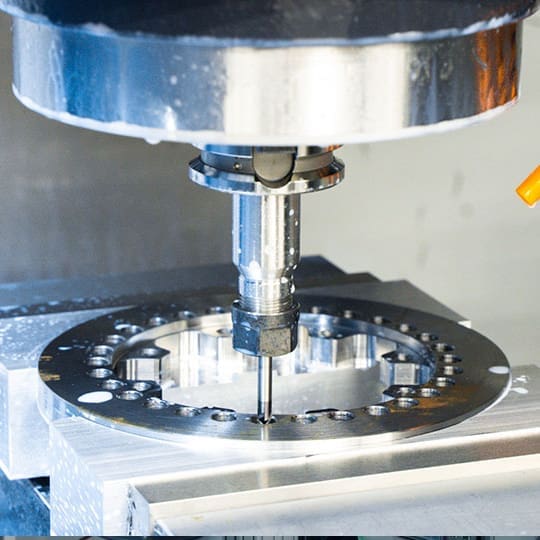
The supply chain that sells capacity and capability rather than product. Subcontract machinists, fabricators, precision engineers, sheet metal specialists, casting and forging houses, welding and heat treatment shops, surface finishing providers, assembly and test houses — none of them have a catalogue. What they have is a CAD package, a quality system, a manufacturing footprint and a delivery promise.
That changes what the salesperson is selling. They are selling the company itself rather than what comes out of it: the machine list, the accreditations (AS9100, ISO 9001, NADCAP, IATF 16949), the engineering team, the on-time-in-full record. The customer is a buyer or supply chain manager at a tier-one or end-market manufacturer, and the relationship is built on capacity availability, quality history and willingness to engineer-in solutions to problems the customer brings to the table.
The salespeople who win here are the ones who can hold a technical conversation with the customer’s engineering team and a commercial conversation with the customer’s procurement team in the same meeting. We hire business development managers, key account managers, sales engineers, estimators-turned-salespeople and sales directors for subcontract and specialist engineering manufacturers across the UK.
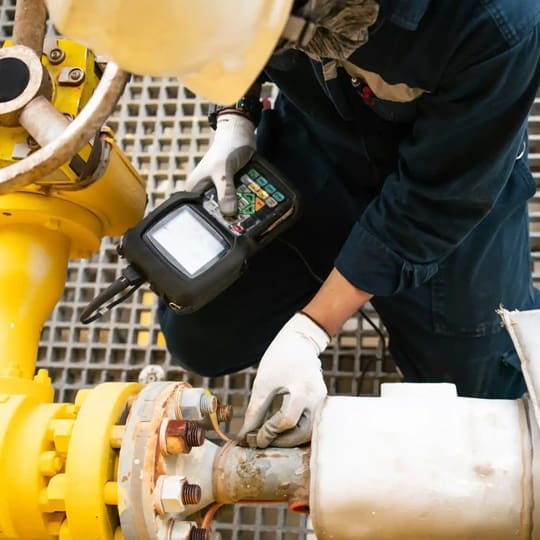
The businesses that sell engineering as a service rather than as a product. Design houses, engineering consultancies, project engineering firms, inspection and NDT providers, testing and calibration services, certification and compliance bodies, and the technical advisory businesses that sit alongside them. The deliverable is expertise, certification or evidence — and the sale is consultative, often regulated, and won on the strength of the engineers behind it.
These businesses sell into all four of the segments above. A non-destructive testing provider sells into defence primes, oil and gas operators, infrastructure asset owners and subcontract manufacturers. A design consultancy sells into shipyards, energy companies, infrastructure clients and subcontract OEMs. The salesperson’s job is to translate the firm’s technical depth into commercial credibility — to make the engineering team’s expertise visible, accessible and bookable to a customer who is buying the people as much as the deliverable.
The discipline is closer to professional services sales than to product sales: pipeline-driven, relationship-led, often retainer or framework-based, and built on case studies and accreditations rather than on price. We hire business development managers, key account managers, technical sales managers, framework managers and sales directors for engineering services, design, inspection and certification businesses across the UK.
For the headline numbers on one page — UK-average base and OTE — see UK Engineering Sales Salary Statistics 2026, or the cross-sector UK Technical Sales Salary Trends 2026.